Every golfer dreams of crushing a drive straight down the fairway or sticking an approach shot right next to the pin. That satisfying thwack that turns heads across the range is addictive. It’s why we keep chasing that little white ball, even though it has a knack for finding trouble. But what makes the ball fly straight? Sure, your swing matters, but two often-overlooked factors, club length and lie angle, can make or break your shot. Get these wrong, and you’re fighting your equipment instead of the course. Here’s why proper club fitting is a game-changer for golfers of all levels, plus how to spot if your clubs are holding you back.
We all want to hit the ball as far as possible, but at what cost? Most golfers don’t realize that club manufacturers have nudged driver lengths closer and closer to the limit. The Rules of Golf allow up to 48 inches, and the USGA and R&A now give pro and elite events the option of capping clubs at 46 inches, which the PGA Tour has adopted. Many stock drivers today come in around 45.5 to 45.75 inches. That extra length does help generate more clubhead speed, which means more distance, but it comes at the expense of control. Longer clubs are simply more difficult to square up consistently. To compensate, manufacturers adjust head weights and lie angles to keep the same club feeling.
Meanwhile, very few professionals use drivers that long. Most tour professionals stick to drivers in the 44.5 to 45.25 inch range for a blend of distance and accuracy. Some experiment with longer drivers to maximize distance and have started to use mini drivers as their fairway finders. The key takeaway? Even the best players tailor club lengths to fit their game. They aren’t grabbing just any “standard” club off the rack.
It’s not just about the driver. Incorrect club length affects every club in your bag. Clubs that are too long force you to stand taller, flattening your swing plane and making you wrap the club around your body. This often leads to thin shots, big pushes, or massive hooks, not to mention extra strain on your back and wrists. On the other side, clubs that are too short force you to hunch over and swing more vertically, creating steep strikes that start left and lead to all sorts of mishits.
Why play generic, off-the-shelf clubs when every golfer’s body and swing are different? A proper fitting matches your clubs to your height, arm length, and natural swing style, letting you move freely without forced or awkward adjustments.
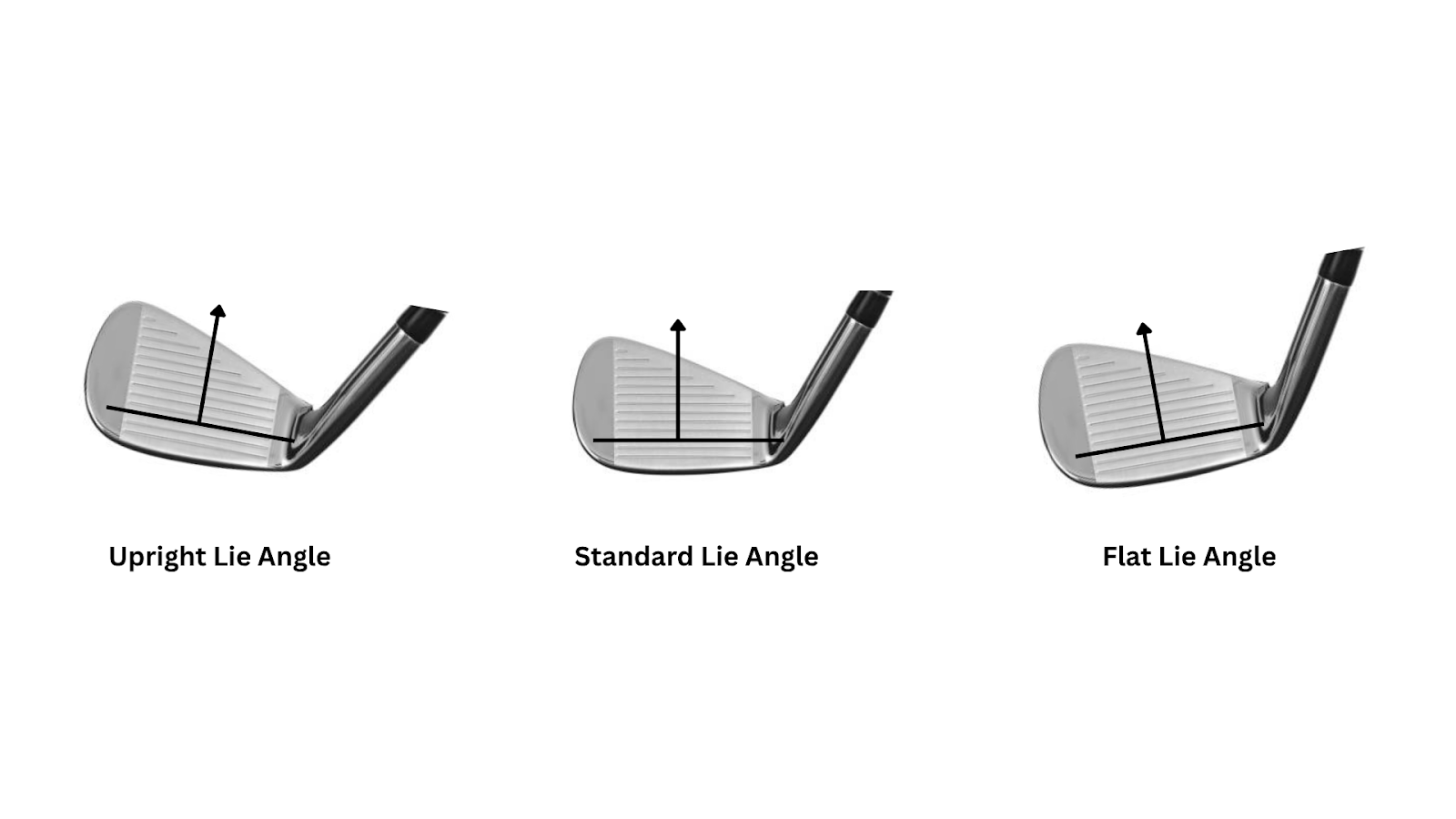
Then there’s lie angle, another huge factor most golfers overlook. Lie angle is simply the angle between the shaft and the sole of the club. It plays a major role in your ball’s start line and how it curves. If your clubs are too upright, the toe lifts off the ground, your divots get heel-heavy, and shots start and curve left (for righties). Too flat, and the toe digs in, sending shots right. Even a degree or two off can drastically change your shot pattern.
This isn’t just an iron issue. Drivers, woods, hybrids, and even putters have lie angles that influence alignment and impact. For example, an upright driver can exaggerate a draw, while a flat hybrid might make it harder to hold greens. Dialing in your lie angles ensures your club face meets the ball square, giving you a reliable start line and minimizing those frustrating curves.
Club length and lie angle also work hand in hand. Lengthening a club usually requires flattening the lie to keep the club head square, while shortening it tends to make the lie more upright. If you add an inch to your irons or driver for more distance without adjusting the lie, you’ll probably start hooking shots. It’s proof that these specs must be in sync. Without proper fitting, you end up making compensations that can ingrain bad habits or even lead to injury.
Getting fit isn’t just for scratch players or local club champions. If you’re serious about improving or want to enjoy the game more, getting clubs tailored to your specs is one of the smartest moves you can make. It also allows you to swing naturally, reducing strain, and it will help you build a more repeatable ball flight rather than fighting your equipment.
It’s a lot easier and safer to get clubs built for your swing than to overhaul your swing to match your clubs. And with all the options available today, there’s no reason to settle for “standard.” So if you’re battling thin shots, heavy shots, or a consistent hook or slice, maybe it’s not just you. Sometimes it isn’t the Indian, it’s the arrow.

Leave a Reply